

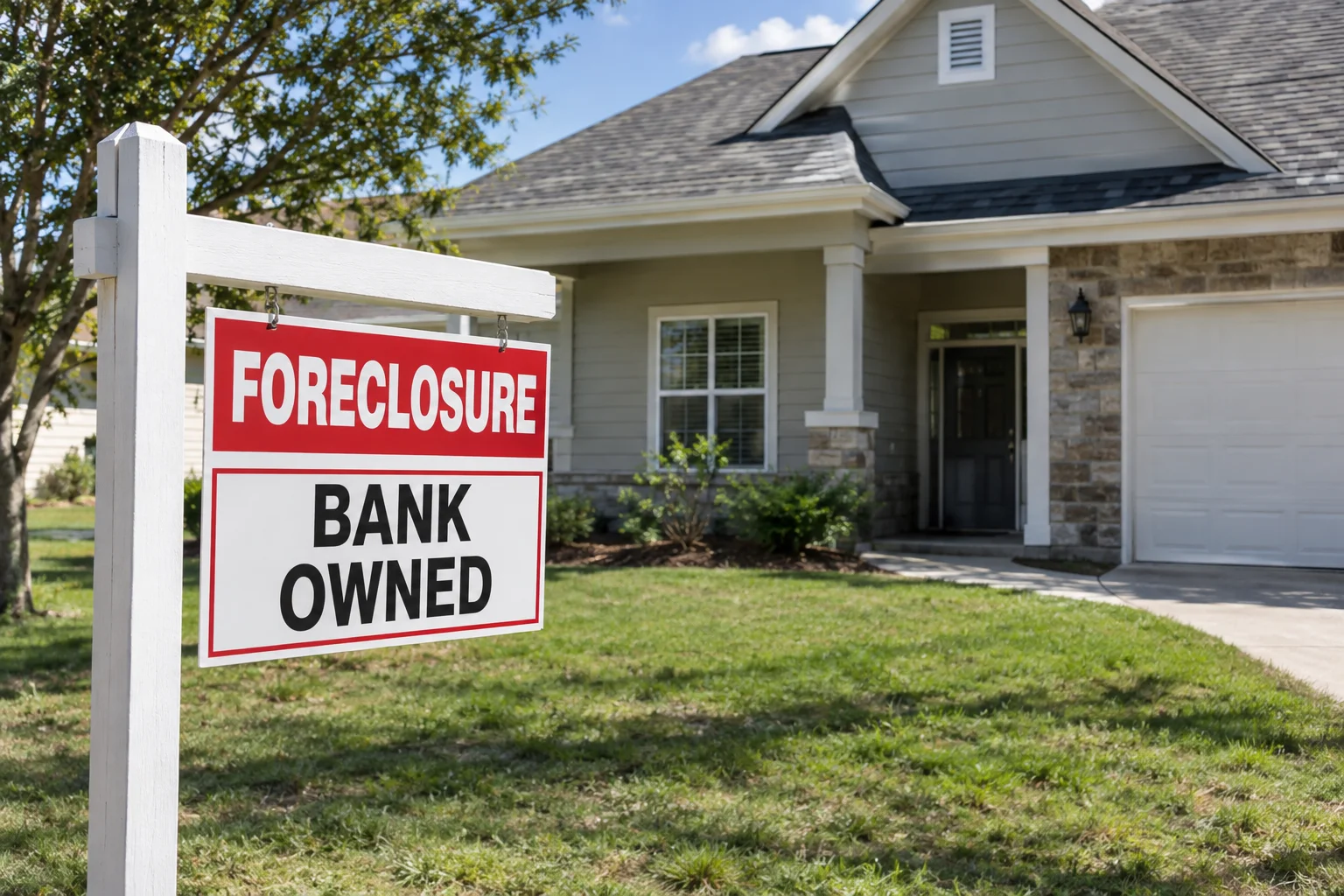
A foreclosed home is a property the lender took back after the previous owner stopped making mortgage payments. If you’ve been house-hunting for a while and keep seeing the word “foreclosure” attached to prices that seem too good to be true, this is why: lenders don’t want to own real estate, and they’re motivated to sell it fast. You can buy one in three ways — at a public auction, as a bank-owned (REO) listing, or directly from an owner in pre-foreclosure through a short sale — and each one plays by its own rules, with its own risk level and its own financing options.
The appeal is obvious: foreclosures often sell below market value, and for buyers willing to put in the extra homework, that can mean real savings or instant equity the day you close. But the risk is just as real. Auction properties usually can’t be inspected before you bid. Some carry unpaid liens or back taxes that quietly become the new owner’s problem. And a few still have people living in them — people who have to be legally removed before you can move in yourself. None of that means you should walk away. It just means you go in with your eyes open.
This guide walks through how each buying path works. It covers what financing is realistic at each stage, and the mistakes that trip up first-time foreclosure buyers most often.
What Does It Mean to Buy a Foreclosed Home?
Foreclosure is the legal process a lender uses to take back a property after a borrower defaults on the mortgage. Depending on the state, that process runs through the courts (judicial foreclosure) or outside them, through a trustee sale (non-judicial foreclosure). Either way, the outcome is the same. The lender ends up with legal authority to sell the home and recover what it’s owed.
That sale can happen at three different points. The point matters a lot for you as a buyer:
- Pre-foreclosure / short sale. The homeowner is behind on payments but still owns the home. They’re trying to sell before the lender forecloses, and the lender must approve the price.
- Auction. The lender forecloses, and the property goes to a public sale — either at the courthouse or online. The highest qualifying bidder wins.
- REO (real estate owned). If nobody bids high enough at auction, the lender takes ownership. It then lists the home for sale on the open market, usually through a real estate agent.
Each stage carries a different mix of discount and risk. That’s really the whole story of foreclosure buying.
The Three Buying Paths, Compared
| Factor | Short Sale | Auction | REO (Bank-Owned) |
|---|---|---|---|
| Typical discount | Small to moderate | Largest, but variable | Moderate |
| Interior inspection | Usually possible | Rarely possible | Usually possible |
| Financing | Conventional, FHA, VA | Cash or hard money, usually | Conventional, FHA, VA |
| Title/lien issues | Lender-negotiated, but can be complex | Buyer’s responsibility to research | Usually cleared before sale |
| Timeline | Slow — approval can take months | Fast, but less certain | Moderate, like a normal listing |
| Best for | Patient buyers, comfortable negotiating | Experienced investors with cash | First-time foreclosure buyers |
If you’ve never bought a foreclosure before, REO properties are the easiest entry point. You can get an inspection. You can use normal financing.
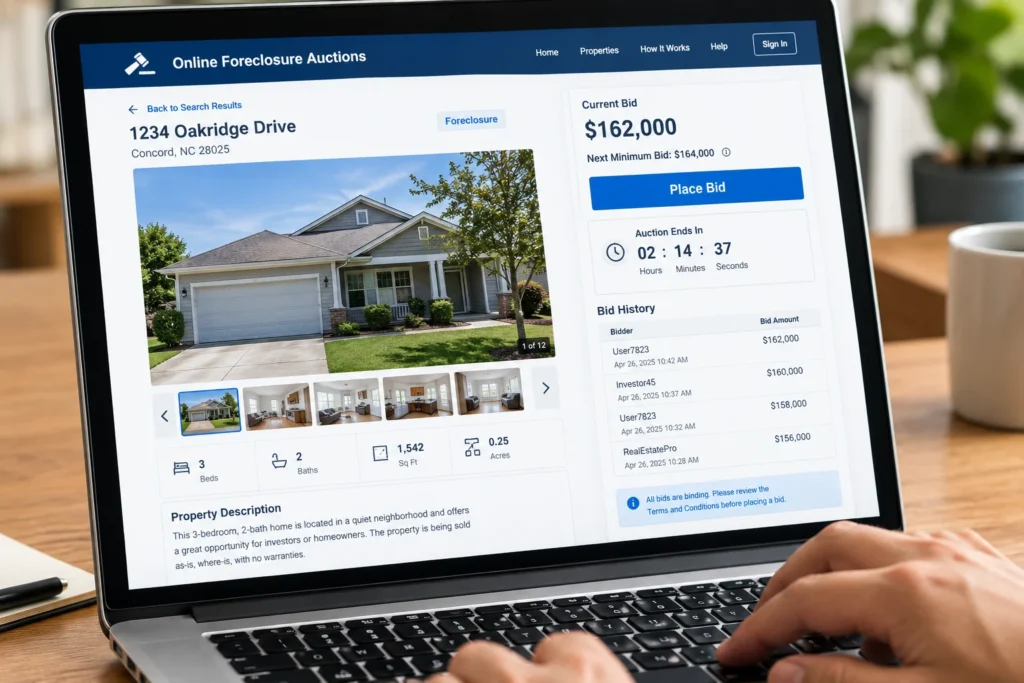
The title work is largely done already. Auctions offer the deepest discounts, but they demand cash and experience. They also demand a tolerance for risk that most first-time buyers don’t have yet.
Pros and Cons of Buying a Foreclosed Home
- Below-market pricing. Lenders want distressed properties off their books. They’re not in the business of holding real estate or covering upkeep on an empty house, so they’re often motivated to sell for less than a comparable, traditionally-sold home.
- Access to neighborhoods that might otherwise be out of reach. Even a modest discount can put a home in a stronger school district within your budget.
- Standard financing is often available. Despite the reputation foreclosures have, REO properties frequently qualify for FHA, VA, or conventional loans — not just cash.
- As-is condition. Sellers of foreclosed homes almost never make repairs or credit you for issues found during inspection. What you see, or don’t see, is what you get.
- Hidden costs. Deferred maintenance, mold, and pest damage are common in homes that sat vacant before foreclosure. Unpaid taxes or liens can sometimes transfer with the property, especially at auction.
- Slower, less predictable timelines. Short sales can drag on for months while the lender reviews the offer. Auctions move fast, but a win isn’t always final. Some states give another party a window to outbid you even after the sale.
- Possible occupants. Some foreclosed homes are still occupied by the former owner or a tenant. Removing them legally can add time, cost, and stress to a purchase that looked simple on paper.
Financing a Foreclosure Purchase
Financing depends heavily on which of the three paths you’re using.
Auctions almost always require cash, or a cashier’s check for a deposit with the balance due shortly after. Some buyers use hard money loans to bridge the gap — short-term, asset-based financing from private lenders. That comes with high interest rates and fees, though. Traditional mortgage lenders generally won’t finance an auction purchase. There’s no time for an appraisal or an inspection contingency.
REO properties are far more financing-friendly. Banks want a clean, fast sale, so they typically accept conventional, FHA, and VA loans, the same as a normal purchase. One option worth knowing about is the FHA 203(k) loan. It rolls the purchase price and the cost of repairs into a single mortgage. That’s especially useful for foreclosures needing real work, since it removes the need to come up with renovation cash separately from your down payment.
Short sales typically use the same financing as a standard purchase, since the seller still legally owns the home. The complication isn’t financing — it’s timing. Lender approval of the sale price can take weeks or months. Your pre-approval needs to stay valid through that wait.
If the home was originally financed with an FHA loan and is now owned by HUD after foreclosure, it may be listed on HUDHomeStore.gov as a HUD home. These properties come with their own bidding process. Owner-occupant buyers get priority over investors during an initial bidding period — worth knowing if you plan to live in the home rather than rent it out.
Step-by-Step: How to Buy a Foreclosed Home
- Get financing lined up first. Whether that’s a mortgage pre-approval or proof of cash, sellers and auction administrators want to see it before you can bid or make an offer.
- Decide which path fits your risk tolerance. First-timers are almost always better served starting with REO listings rather than auctions.
- Find listings. HUD Home Store, Fannie Mae’s HomePath, Freddie Mac’s HomeSteps, county auction sites, and your local MLS are the main sources.
- Research before you fall in love with a price. Pull tax records, check for liens, and review the property’s history where you can. A low price means little if repairs erase the discount.
- Inspect the property if you can. This is possible for most REO and short-sale properties, and it’s worth paying for even when the home looks fine in photos. Our house inspection checklist walks through exactly what a good inspector checks, room by room. Interior access at a live auction, on the other hand, is essentially never possible — which is exactly why auction buyers price in more risk.
- Make your offer or place your bid. Follow whichever process applies to your path — a standard purchase offer, or a registered auction bid.
- Budget for as-is repairs. Get contractor estimates before closing whenever you can, especially for anything structural or related to the roof — a roof leak that’s gone unaddressed for a year behind a vacant house is a very different repair job than one caught early.
- Close carefully. Confirm title has been cleared of prior liens. This is usually already done for REO properties, but it’s your job to verify at auction.
- Handle occupancy issues through proper legal channels, rather than trying to negotiate directly with people who may be losing their home.
Judicial vs. Non-Judicial Foreclosure — and Why It Matters to You
Every state handles foreclosure a little differently. That difference isn’t just legal trivia. It affects how long the process takes, how much certainty you have as a buyer, and whether a former owner can reclaim the property after a sale.
In judicial foreclosure states, the lender must file a lawsuit and get court approval before selling the home. This process tends to move slowly, sometimes taking a year or more. It also tends to come with clearer legal protections.
In non-judicial foreclosure states, the sale happens outside the courts, typically through a trustee named in the loan documents. These sales move faster.
Here’s the detail buyers most often overlook: many states give the former owner a right of redemption. That’s a legal window, after the sale, during which they can repay what’s owed and reclaim the property. Where it exists, it can range from a few weeks to several months — in a small number of states, up to a year. Where it doesn’t exist, ownership typically transfers cleanly once the sale is final. This varies significantly by state. Confirm the specific rule where you’re buying, particularly at auction — an REO listing’s redemption period, if any, has usually already passed.
Title, Liens, and Hidden Costs
This is the part of foreclosure buying that catches people off guard most often. It’s also the part that varies most by purchase type.
With REO properties, the lender has generally already cleared the title of prior liens. Unpaid property taxes are usually resolved before listing, too — one of the main reasons REO is considered the safer entry point.
With auction purchases, none of that is guaranteed. You may inherit a second mortgage, a mechanic’s lien, unpaid HOA dues, or back taxes, depending on the state’s foreclosure priority rules. A title search before bidding isn’t optional. It’s the single most important piece of due diligence you can do. Skipping it is how experienced investors sometimes end up with a “deal” that costs more than a traditional purchase, once every debt attached to the property surfaces.
Physical hidden costs matter too. Homes that sat vacant for months are prone to mold from unresolved leaks, frozen or burst pipes, and pest infestations. If you notice stair-step cracks in the foundation or doors that no longer close right, it’s worth reading up on what foundation cracks actually mean before you assume it’s cosmetic. A previous owner’s unpermitted work can also force your hand — a city inspector can require you to fix or remove it later. None of this shows up in the listing price, which is exactly the point: the sticker price and the real price are rarely the same number on a foreclosure.
Common Mistakes to Avoid
- Skipping the title search on an auction property. Assuming your bid is the total cost is one of the most expensive mistakes a foreclosure buyer can make.
- Underestimating repair costs. Get a contractor’s opinion whenever access allows, rather than guessing from photos.
- Showing up to an auction without financing confirmed. Deposits are typically due immediately, in cash, with no financing contingency to fall back on.
- Ignoring occupancy status. A home that looks vacant online isn’t always vacant in person. Removing occupants requires a legal process, not a conversation on the porch.
- Chasing the biggest discount instead of the best net deal. The lowest price isn’t the best deal if repairs or liens eat up the savings.
Where to Find Foreclosure Listings
- HUDHomeStore.gov — the official government listing site for HUD-owned properties, foreclosed from FHA-insured loans
- Fannie Mae’s HomePath and Freddie Mac’s HomeSteps — REO listings from the two government-sponsored mortgage entities
- County sheriff or trustee auction websites — for live or online foreclosure auction listings, which vary by county and state
- Your local MLS, through a real estate agent — many REO properties are listed just like any other home for sale
Is Buying a Foreclosure Right for You?
Foreclosures tend to work best for buyers who fit at least a few of these descriptions:
- You’re comfortable with an as-is purchase and don’t expect seller-paid repairs
- You have strong cash reserves, or financing pre-approved before you start shopping
- You’re patient enough to handle a slower closing timeline, especially for short sales
- You’re willing to pay for a title search or contractor estimate before committing, even on a property you might not end up buying
They make less sense if you’re on a tight timeline, or if you don’t have much cash cushion left over after the down payment for surprises. The same goes if what you really want is the predictability of a traditional purchase, where a seller fixes what the inspection turns up instead of shrugging and pointing to “as-is” in the contract. None of that rules foreclosures out entirely — it just means REO properties, rather than auctions, are probably where you should start looking.
FAQ
Do you need perfect credit to buy a foreclosed home?
No. REO and short sale purchases use standard FHA, VA, or conventional financing, which means the same credit requirements as any other home purchase. Auctions are the exception — those almost always require cash or a hard money loan, so credit score matters less than having funds ready.
How much below market value do foreclosures actually sell for?
It varies widely by path and market. Auctions tend to offer the deepest discounts but carry the most risk and uncertainty. REO and short sale discounts are usually smaller and more predictable. Treat any specific percentage you see quoted online with skepticism — the real number depends on your local market and the property’s condition.
Can you negotiate the price at a foreclosure auction?
No. Auctions work on competitive bidding, not negotiation — you’re bidding against other buyers, not making an offer to a seller. REO and short sale prices, on the other hand, can be negotiated much like a traditional purchase, though the lender has final say on a short sale.
How much deposit do you need at a foreclosure auction?
This varies by county and auction type, but expect to bring a cashier’s check for a deposit — often a percentage of your bid — due immediately if you win, with the balance due shortly after. Requirements are set by the county or trustee running the sale, so confirm the exact amount and format before you show up.
What happens to a second mortgage or HOA debt after a foreclosure sale?
It depends entirely on the purchase path and your state’s lien priority rules. REO properties typically have these resolved before listing. At auction, you may inherit them — which is exactly why a title search before bidding isn’t optional.
How long does it take to close on an REO property?
Roughly the same as a standard home purchase, since REO sellers accept normal financing and inspections. Short sales take considerably longer, since the lender has to approve the price, which can add weeks or months to the timeline.
Do you need a real estate agent to buy at a foreclosure auction?
Not always — many auctions let you register and bid directly. But an agent experienced with foreclosures can still be worth it for REO listings and short sales, where negotiation and paperwork look more like a traditional purchase.
If a foreclosure looks like an incredible deal, what’s the catch?
Usually one of three things: hidden repair costs from a property that sat vacant, liens or back taxes that didn’t show up in the listing price, or occupants who still need to be legally removed. None of these are dealbreakers on their own — they’re just costs that don’t show up in the sticker price, which is why research and inspection (where possible) matter more here than in a standard purchase.
Sources & References
- HUD Home Store — the official U.S. Department of Housing and Urban Development listing site for HUD-owned (REO) properties foreclosed from FHA-insured loans. hudhomestore.gov
- HUD — FHA 203(k) Rehabilitation Mortgage Insurance Program — official program details on financing a purchase and renovation with a single mortgage. hud.gov/program_offices/housing/sfh/203k
[…] whether the provider operates in your state, since forced sales and other settlement complications are more likely if you’re unsure of local rules going […]
[…] be pre-approved before you start looking. If you’re hunting for a bargain, read our guide to buying a foreclosed home […]